 plumi
The circular economy: AQA A‑Level Environmental Science questions
AQA A-Level Environmental Science past-paper questions on 3.6.4 The circular economy, 2020–2025, with mark schemes and examiner’s reports where available.
Getting your paper ready…
AQA A-Level Environmental ScienceThe circular economy551 questions
Paper
All papers
Exam
All years
Calculations
Loading the full question list…


All 14 questions on The circular economy, as a list
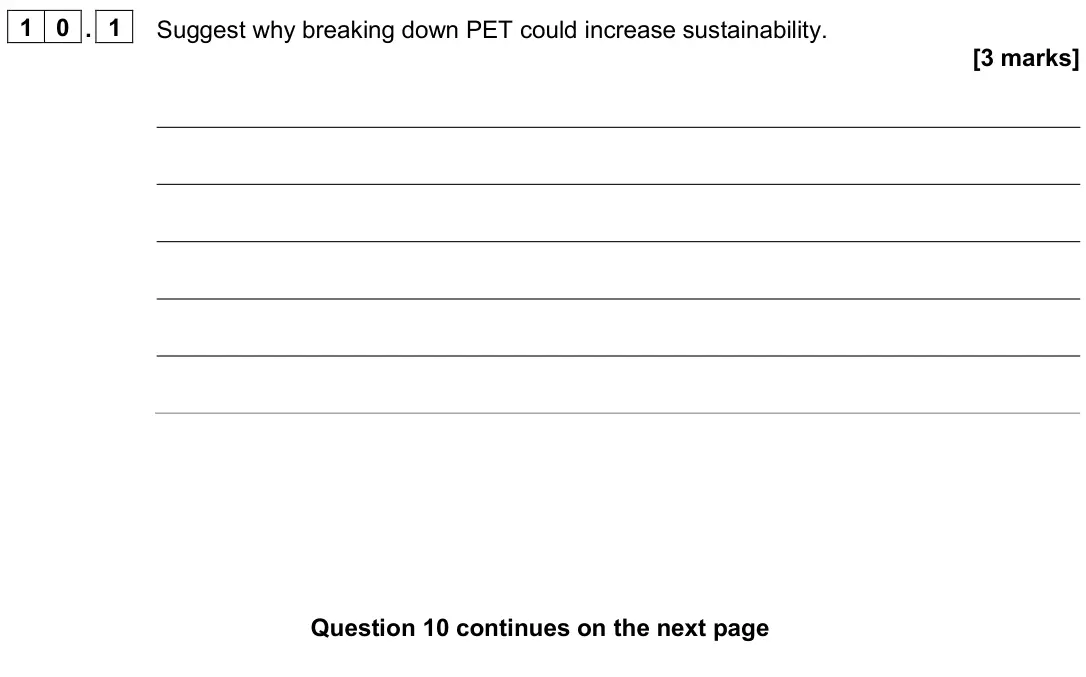
- June 2025, Paper 2, Q10.1 (3 marks): Suggest why breaking down PET could increase sustainability. [3 marks]
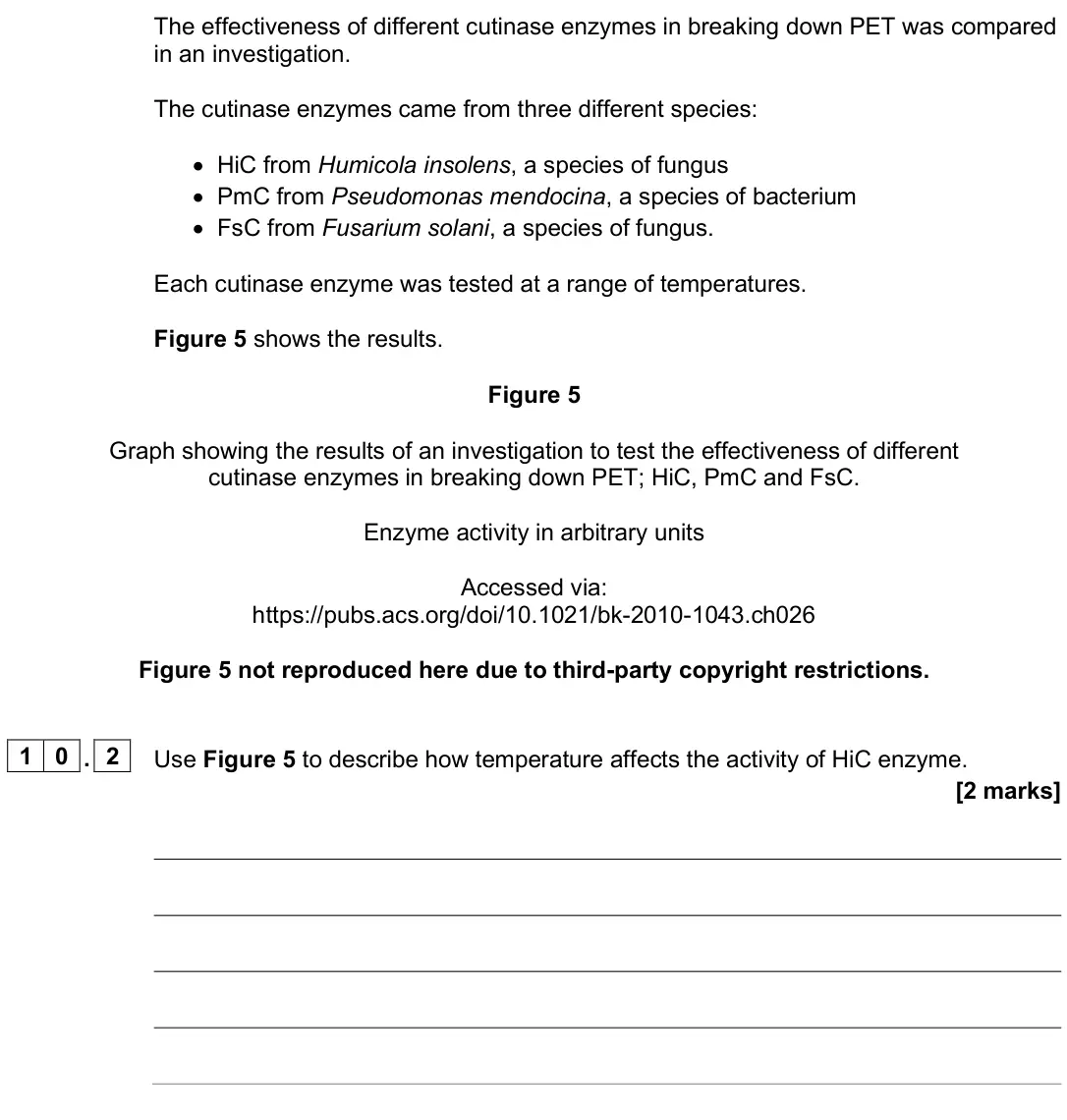
- June 2025, Paper 2, Q10.2 (2 marks): Use Figure 5 to describe how temperature affects the activity of HiC enzyme. [2 marks]
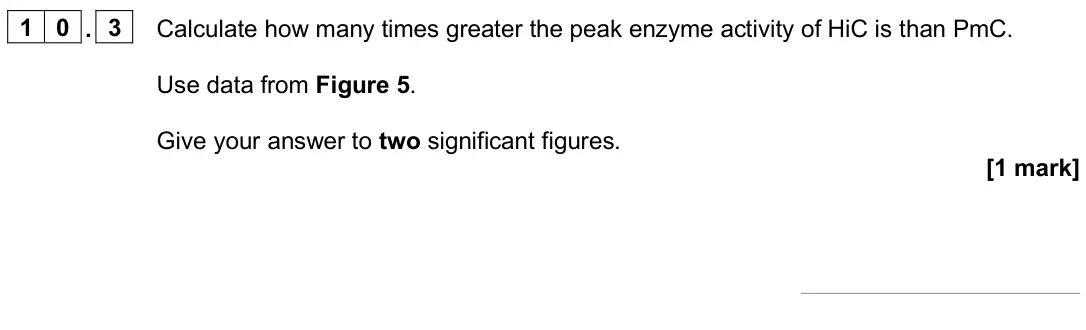
- June 2025, Paper 2, Q10.3 (1 mark): Calculate how many times greater the peak enzyme activity of HiC is than PmC. Use data from Figure 5. Give your answer to two significant figures. [1 mark]
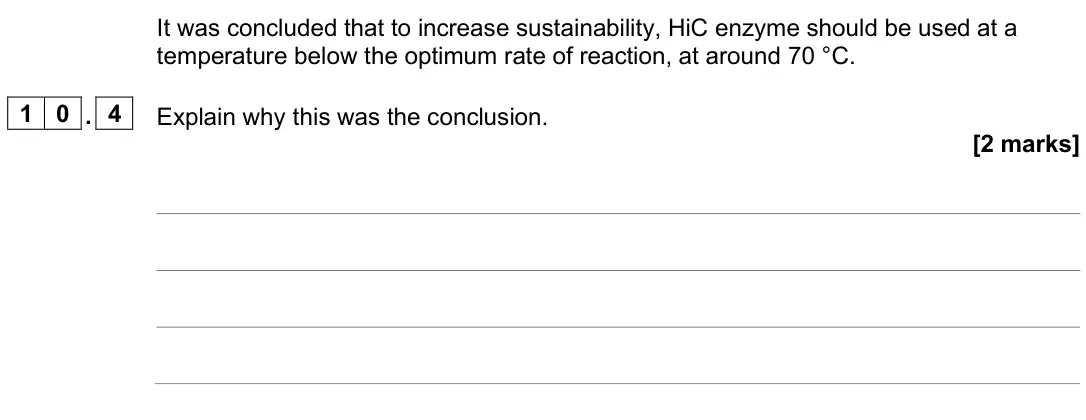
- June 2025, Paper 2, Q10.4 (2 marks): Explain why this was the conclusion. [2 marks]
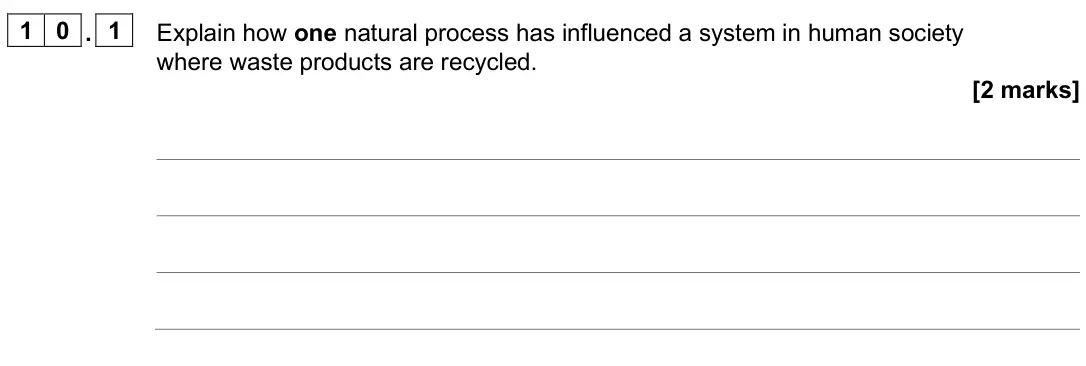
- June 2024, Paper 2, Q10.1 (2 marks): Explain how one natural process has influenced a system in human society where waste products are recycled. [2 marks]
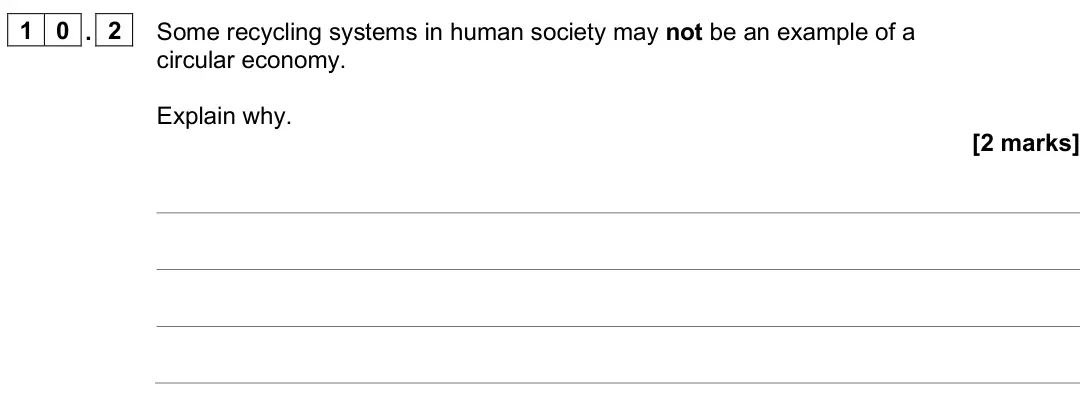
- June 2024, Paper 2, Q10.2 (2 marks): Some recycling systems in human society may not be an example of a circular economy. Explain why. [2 marks]
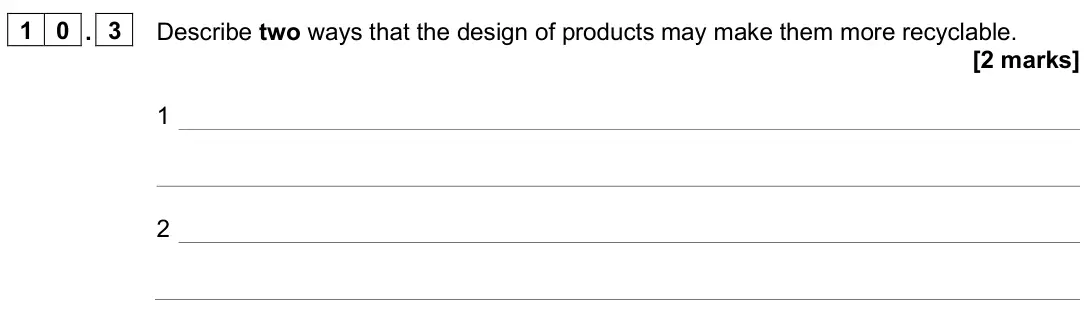
- June 2024, Paper 2, Q10.3 (2 marks): Describe two ways that the design of products may make them more recyclable. [2 marks] 1 2
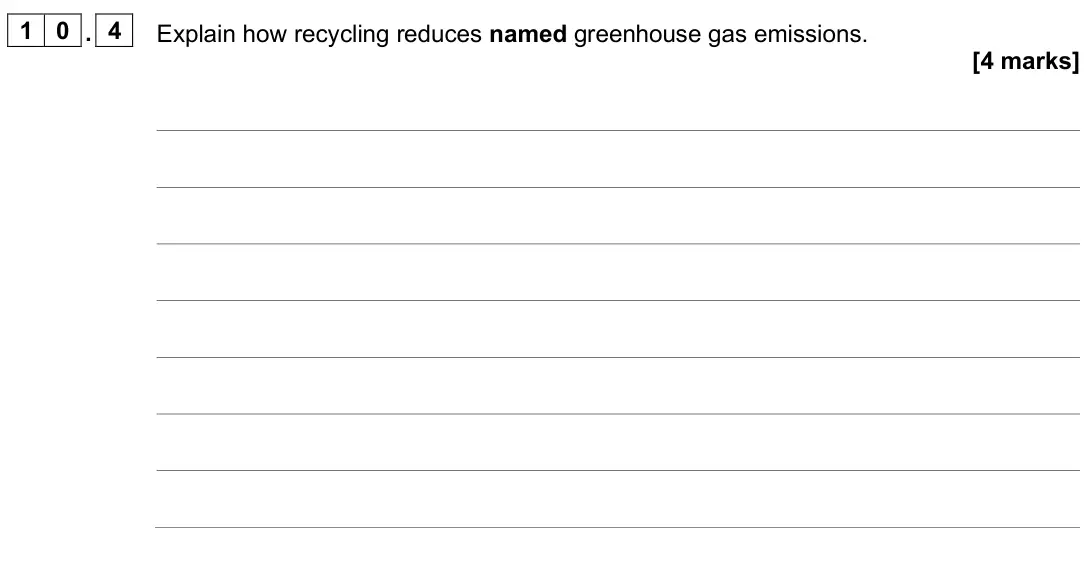
- June 2024, Paper 2, Q10.4 (4 marks): Explain how recycling reduces named greenhouse gas emissions. [4 marks]
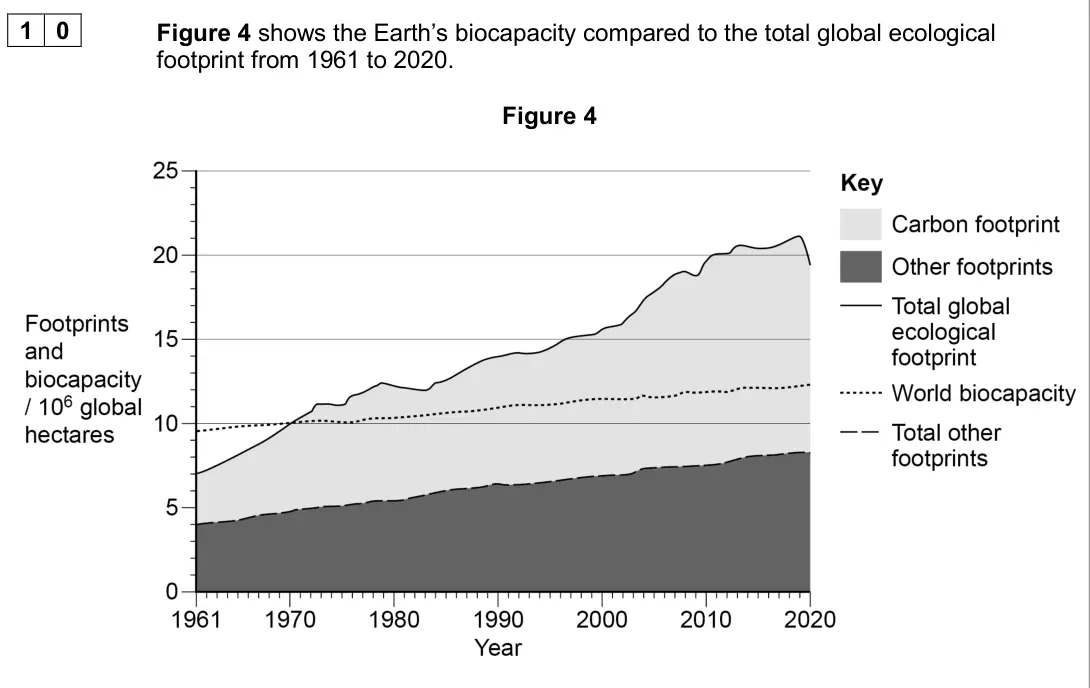
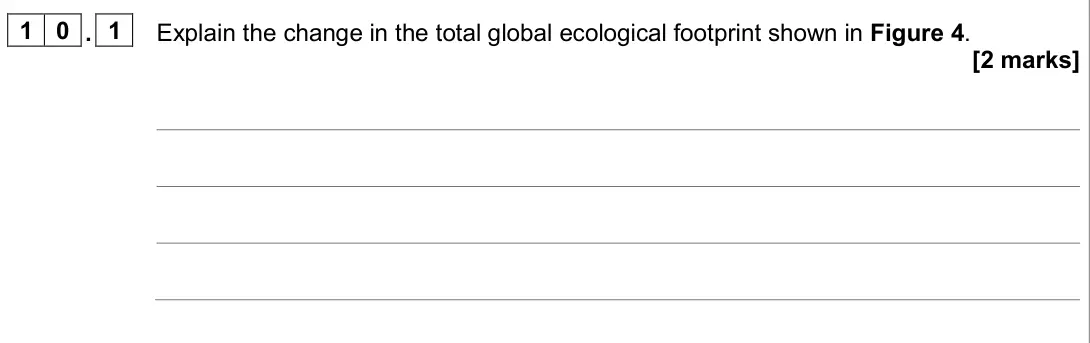
- June 2022, Paper 2, Q10.1 (2 marks): Explain the change in the total global ecological footprint shown in Figure 4. [2 marks]
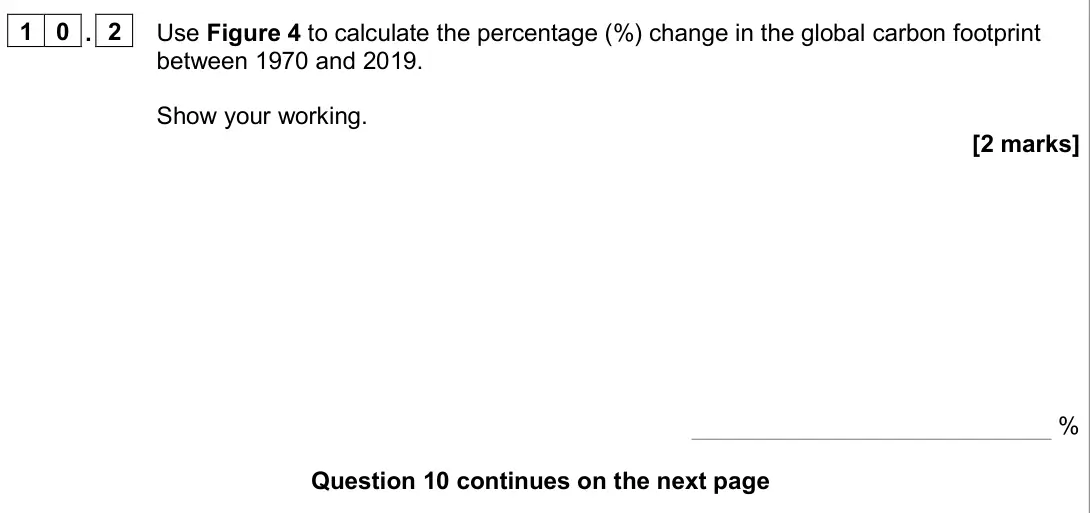
- June 2022, Paper 2, Q10.2 (2 marks): Use Figure 4 to calculate the percentage (%) change in the global carbon footprint between 1970 and 2019. Show your working. [2 marks] %
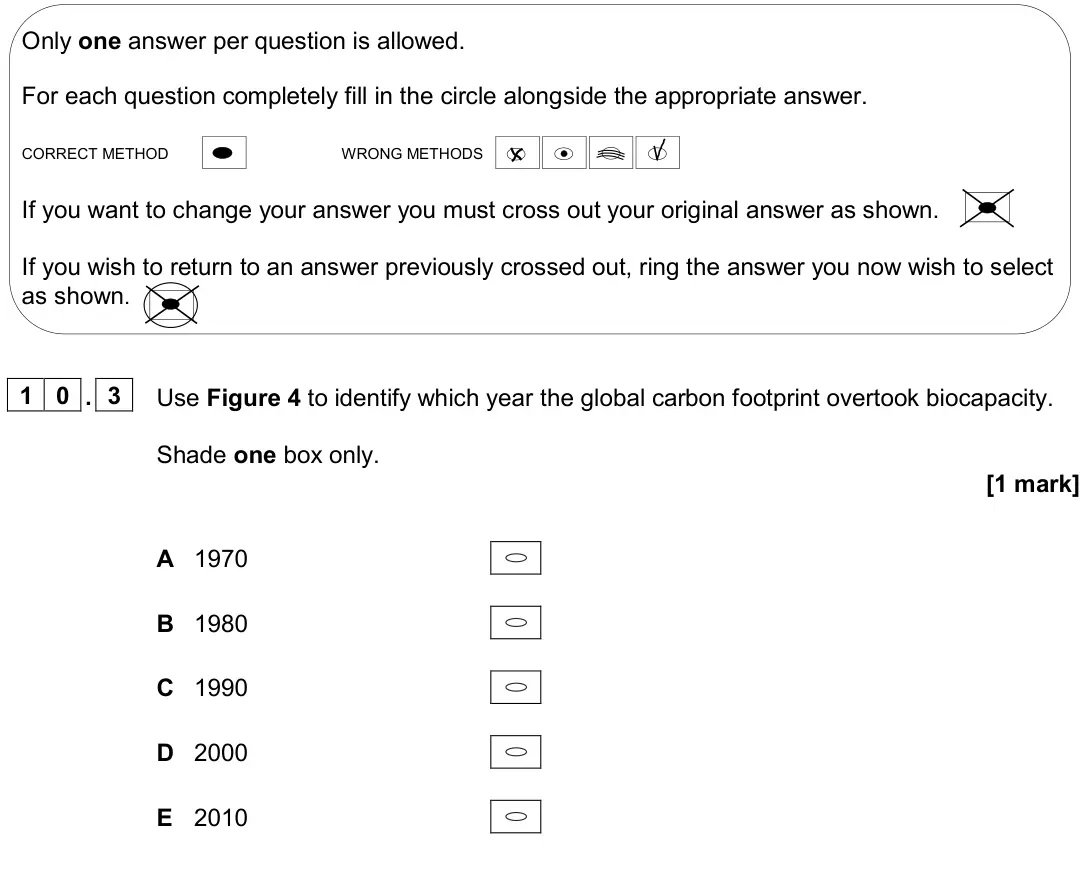
- June 2022, Paper 2, Q10.3 (1 mark): Use Figure 4 to identify which year the global carbon footprint overtook biocapacity. Shade one box only. [1 mark] A 1970 B 1980 C 1990 D 2000 E 2010
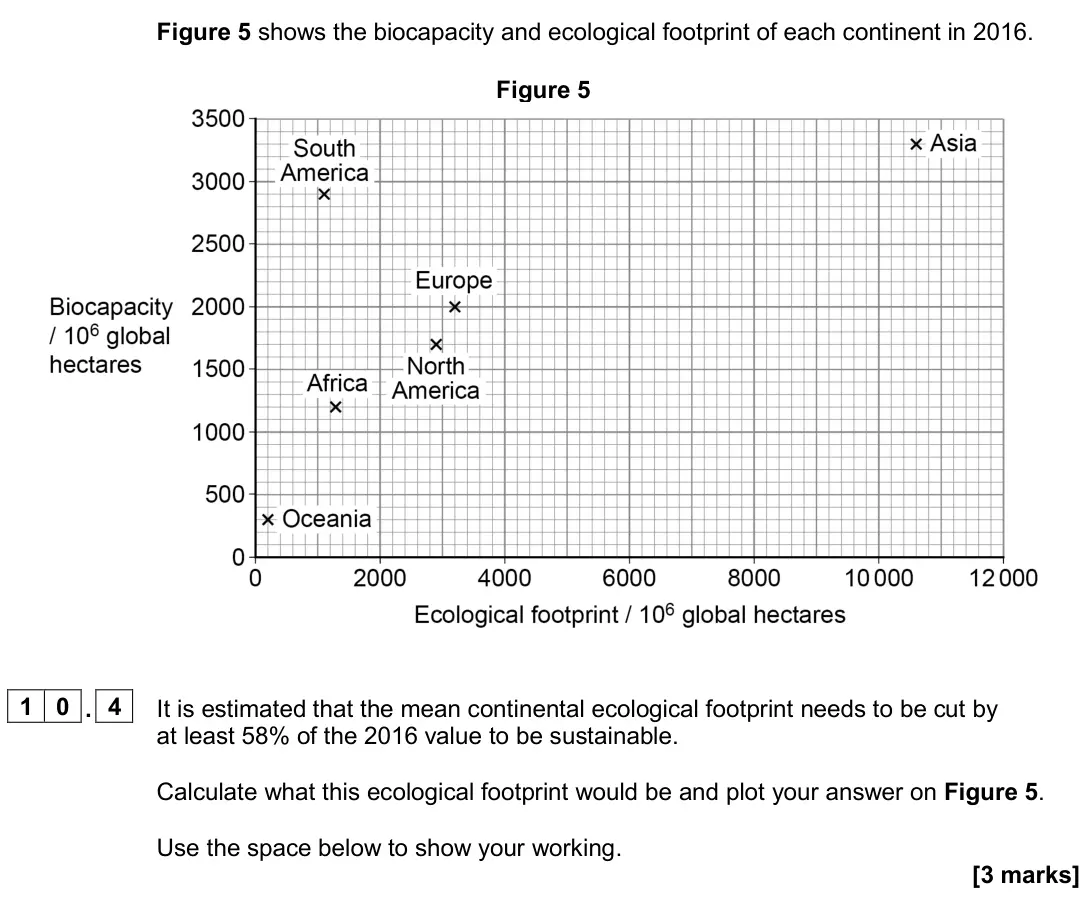
- June 2022, Paper 2, Q10.4 (3 marks): It is estimated that the mean continental ecological footprint needs to be cut by at least 58% of the 2016 value to be sustainable. Calculate what this ecologic
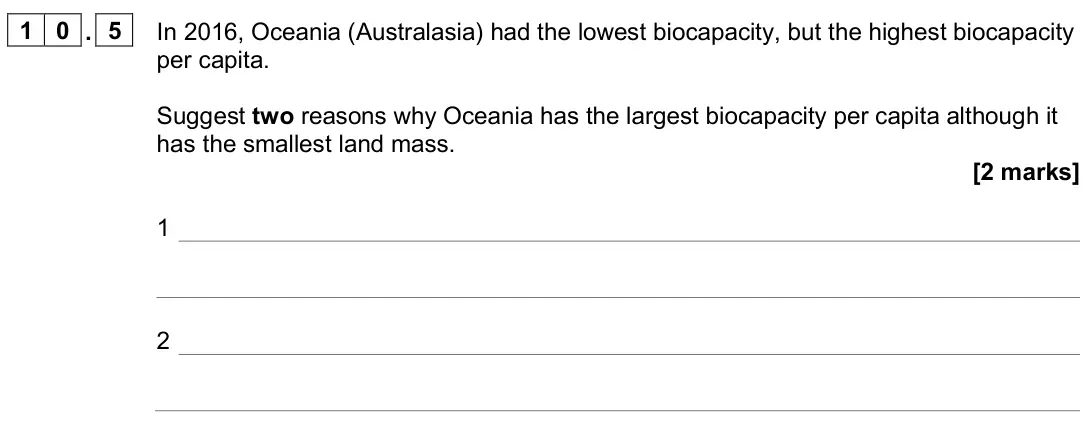
- June 2022, Paper 2, Q10.5 (2 marks): In 2016, Oceania (Australasia) had the lowest biocapacity, but the highest biocapacity per capita. Suggest two reasons why Oceania has the largest biocapacity p
- Specimen, Paper 2, Q11.2 (25 marks): Discuss how the development of the Circular Economy may make sustainable lifestyles more achievable. [25 marks]
Questions, mark schemes and examiner’s reports are © AQA, from their published past papers. Plumi isn’t affiliated with any exam board. Want whole papers? AQA A-Level Environmental Science past papers.
The Plumi iPad app also offers exam-style questions with AI feedback on your handwritten working.