Skip to content
Try on iPad

Style

Get started

WJEC GCSE Biology questions by topic

Getting your paper ready…

WJEC GCSE Biology1,404 questions

Topics Pick as many as you like. Open one to choose its sub-topics.

By area

Paper
All papers
Exam
All years
Calculations
Difficulty
More filters
Exam boards
WJEC

Loading the full question list…
1,404 questions

More options
  1. Q1(a)(i)Summer 2025 · Unit 1 Higher3 marksCore

    1
    Setup for original question 1(a)(i)

    Loading the question setup…

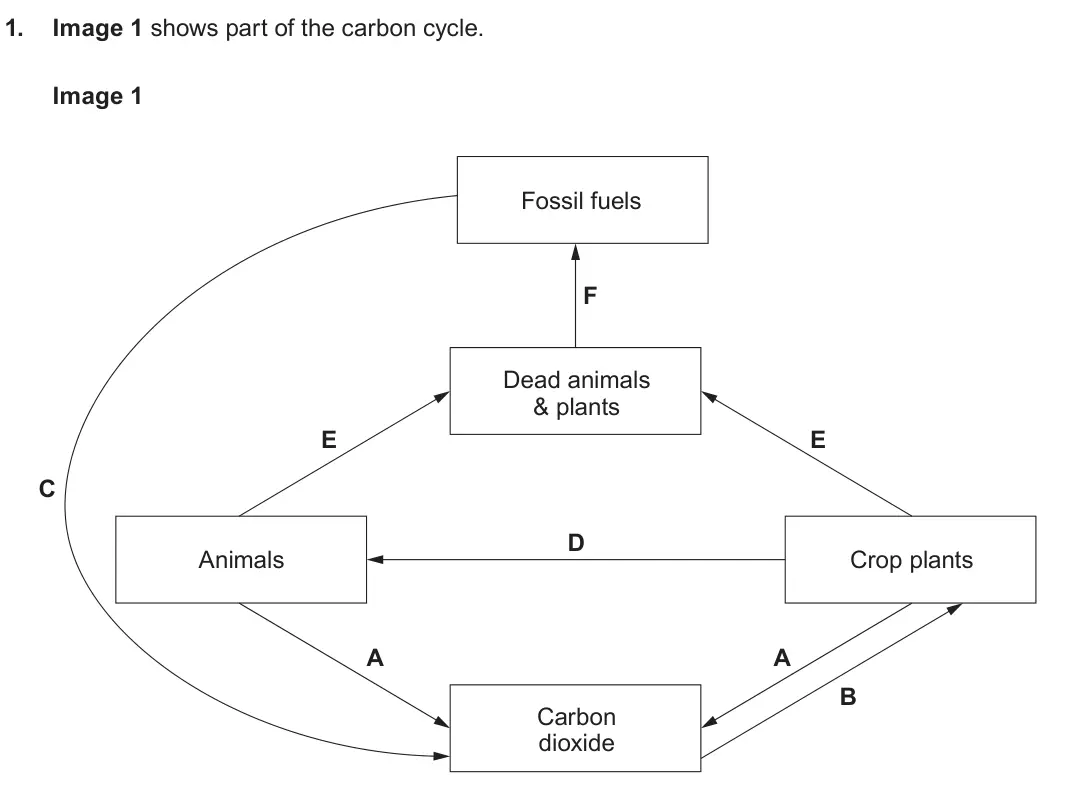
    Original question 1(a)(i): State the name of the processes A, C and D. [3] A C D

    Loading the question…

    The whole paper ↗
  2. Q1(a)(ii)Summer 2025 · Unit 1 Higher1 markWarm-up

    2
    Original question 1(a)(ii): State the name of process B which directly removes carbon dioxide from the air. [1]

    Loading the question…

    The whole paper ↗
  3. Q1(a)(iii)Summer 2025 · Unit 1 Higher1 markWarm-up

    3
    Original question 1(a)(iii): State one product of process B which contains carbon. [1]

    Loading the question…

    The whole paper ↗
  4. Q1(b)(i)Summer 2025 · Unit 1 Higher2 marksCore

    4
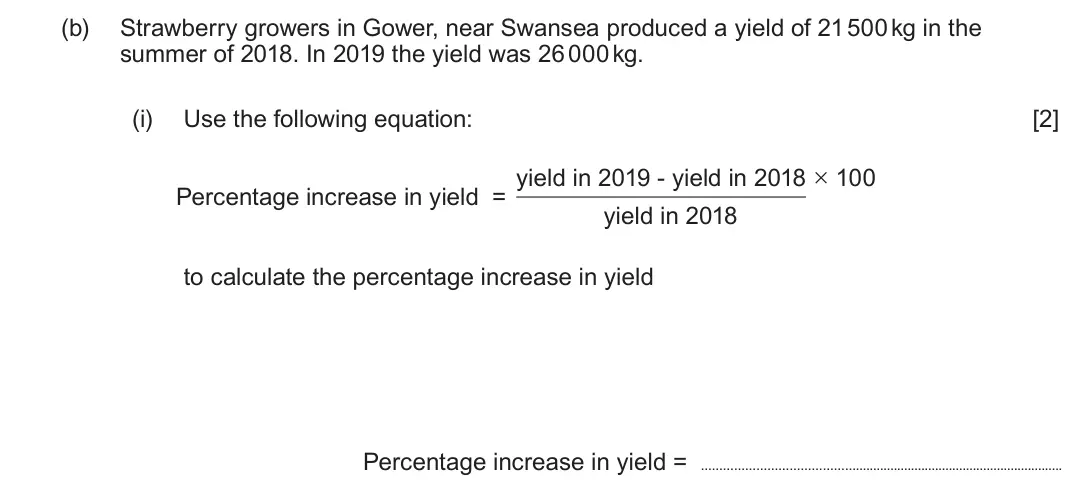
    Original question 1(b)(i): Use the following equation: [2] Percentage increase in yield = yield in 2019 - yield in 2018 × 100 yield in 2018 to calculate the percentage increase in yield P

    Loading the question…

    The whole paper ↗
  5. Q1(b)(ii)Summer 2025 · Unit 1 Higher2 marksCore

    5
    Original question 1(b)(ii): Other than water and carbon dioxide, state two substances that could have been used to increase the strawberry yield. [2] 1 2.

    Loading the question…

    The whole paper ↗
  6. Q2(a)Summer 2025 · Unit 1 Higher1 markWarm-up

    6
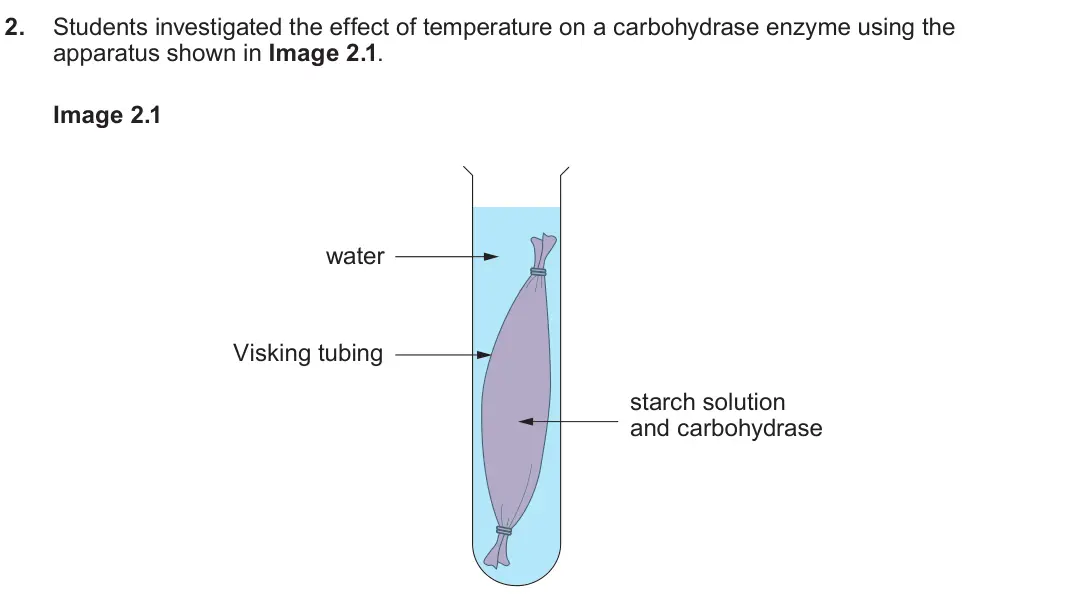
    Setup for original question 2(a)

    Loading the question setup…

    Original question 2(a): State the name of the model that describes how enzymes work. [1]

    Loading the question…

    The whole paper ↗
  7. Q2(b)Summer 2025 · Unit 1 Higher1 markWarm-up

    7
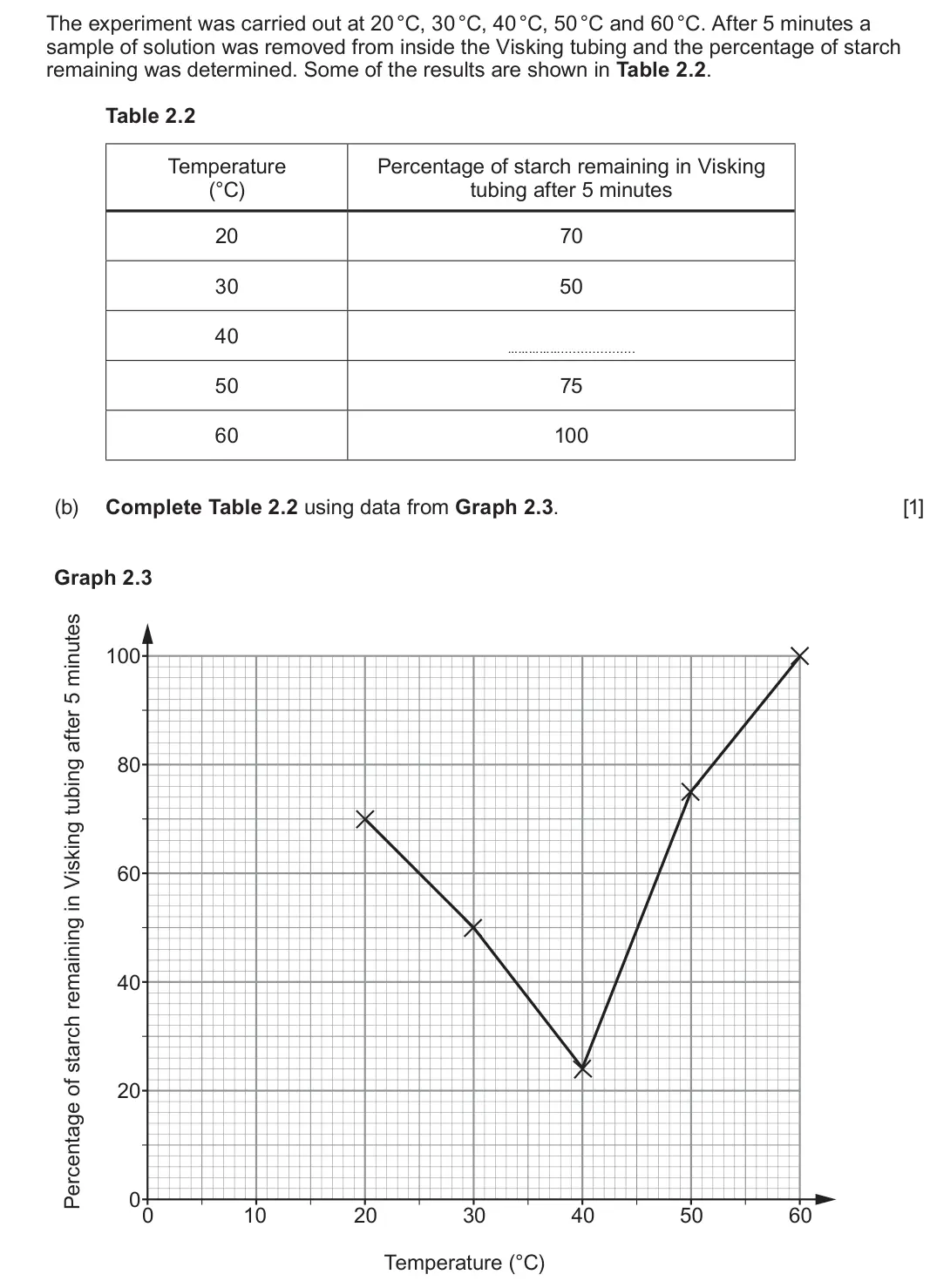
    Original question 2(b): Complete Table 2.2 using data from Graph 2.3. [1] Graph 2.3 100 80 60 40 20 0 0 10 20 30 40 50 60 Temperature (°C)

    Loading the question…

    The whole paper ↗
  8. Q2(c)(i)Summer 2025 · Unit 1 Higher1 markWarm-up

    8
    Original question 2(c)(i): Identify the optimum temperature for the carbohydrase in this investigation. [1] °C

    Loading the question…

    The whole paper ↗
  9. Q2(c)(ii)Summer 2025 · Unit 1 Higher2 marksCore

    9
    Original question 2(c)(ii): Describe how you could amend the method to identify the optimum temperature more accurately. [2]

    Loading the question…

    The whole paper ↗
  10. Q2(c)(iii)Summer 2025 · Unit 1 Higher3 marksStretch

    10
    Original question 2(c)(iii): Explain the results at 60 °C. [3]

    Loading the question…

    The whole paper ↗
  11. Q2(d)(i)Summer 2025 · Unit 1 Higher1 markWarm-up

    11
    Original question 2(d)(i): Name the reagent used to test for starch. [1]

    Loading the question…

    The whole paper ↗
  12. Q2(d)(ii)Summer 2025 · Unit 1 Higher2 marksStretch

    12
    Original question 2(d)(ii): Predict the colour that would be seen at the end of the test and explain your answer. [2]

    Loading the question…

    The whole paper ↗
  13. Q3(a)(i)Summer 2025 · Unit 1 Higher1 markWarm-up

    13
    Setup for original question 3(a)(i)

    Loading the question setup…

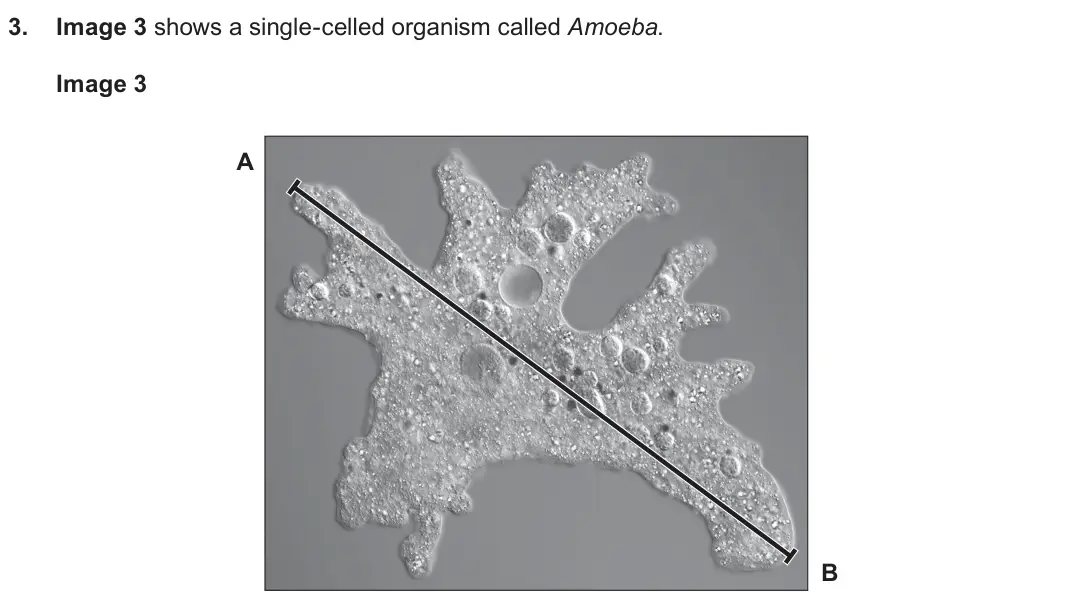
    Original question 3(a)(i): Draw an arrow labelled C to identify the cell membrane of the Amoeba in Image 3 State the function of the cell membrane. [1]

    Loading the question…

    The whole paper ↗
  14. Q3(a)(ii)Summer 2025 · Unit 1 Higher3 marksStretch

    14
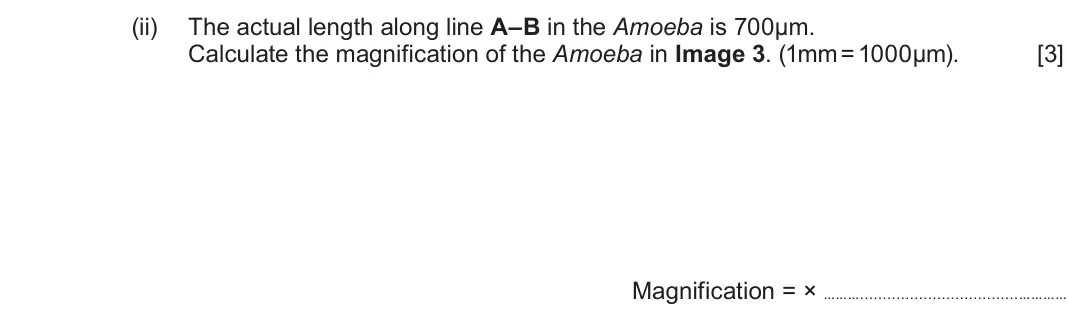
    Original question 3(a)(ii): The actual length along line A–B in the Amoeba is 700µm. Calculate the magnification of the Amoeba in Image 3 (1mm = 1000µm). [3] Magnification = ×

    Loading the question…

    The whole paper ↗
  15. Q3(a)(iii)Summer 2025 · Unit 1 Higher1 markWarm-up

    15
    Original question 3(a)(iii): State the name of the process by which Amoeba exchanges gases with its environment. [1] …

    Loading the question…

    The whole paper ↗
  16. Q3(b)Summer 2025 · Unit 1 Higher3 marksStretch

    16
    Original question 3(b): Amoeba do not need a complex respiratory system to allow gas exchange but humans do. Explain how the volume of the human thorax changes to allow inspiration (br

    Loading the question…

    The whole paper ↗
  17. Q4(a)(i)Summer 2025 · Unit 1 Higher1 markCore

    17
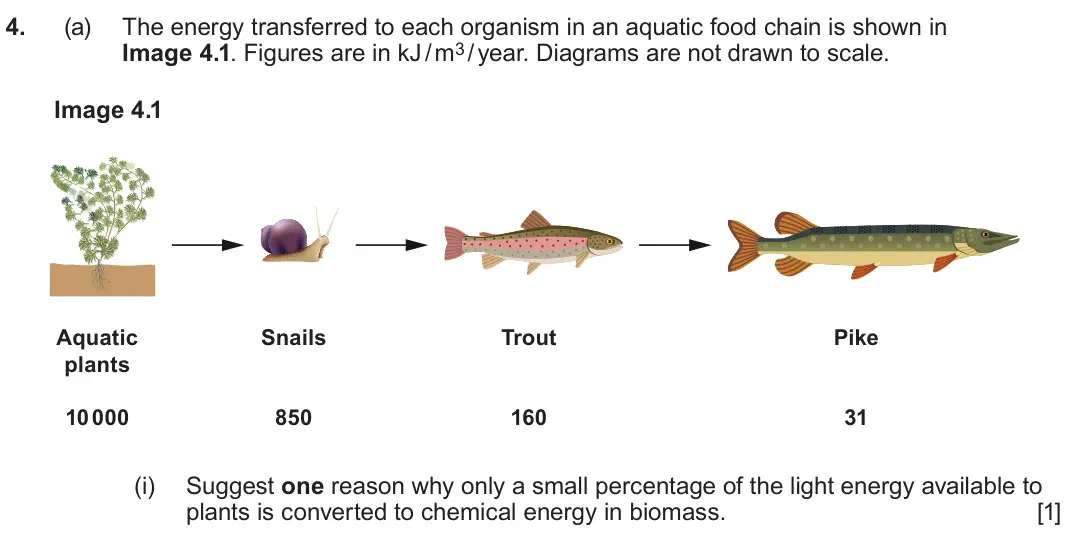
    Original question 4(a)(i): Suggest one reason why only a small percentage of the light energy available to plants is converted to chemical energy in biomass. [1]

    Loading the question…

    The whole paper ↗
  18. Q4(a)(ii)Summer 2025 · Unit 1 Higher2 marksCore

    18
    Original question 4(a)(ii): Use the information in Image 4.1 to calculate the efficiency of energy transfer between the aquatic plants and the snails. [2] Efficiency = … . %

    Loading the question…

    The whole paper ↗
  19. Q4(a)(iii)Summer 2025 · Unit 1 Higher1 markWarm-up

    19
    Original question 4(a)(iii): State one way in which energy is lost between each trophic level. [1]

    Loading the question…

    The whole paper ↗
  20. Q4(a)(iv)Summer 2025 · Unit 1 Higher1 markWarm-up

    20
    Original question 4(a)(iv): Explain why it is unlikely that this food chain could support another trophic level. [1]

    Loading the question…

    The whole paper ↗
Browse all topics

Questions, mark schemes and examiner’s reports are © WJEC CBAC Ltd, from their published past papers. Plumi isn’t affiliated with any exam board. Want whole papers? WJEC GCSE Biology past papers.

The Plumi iPad app also offers exam-style questions with AI feedback on your handwritten working.